
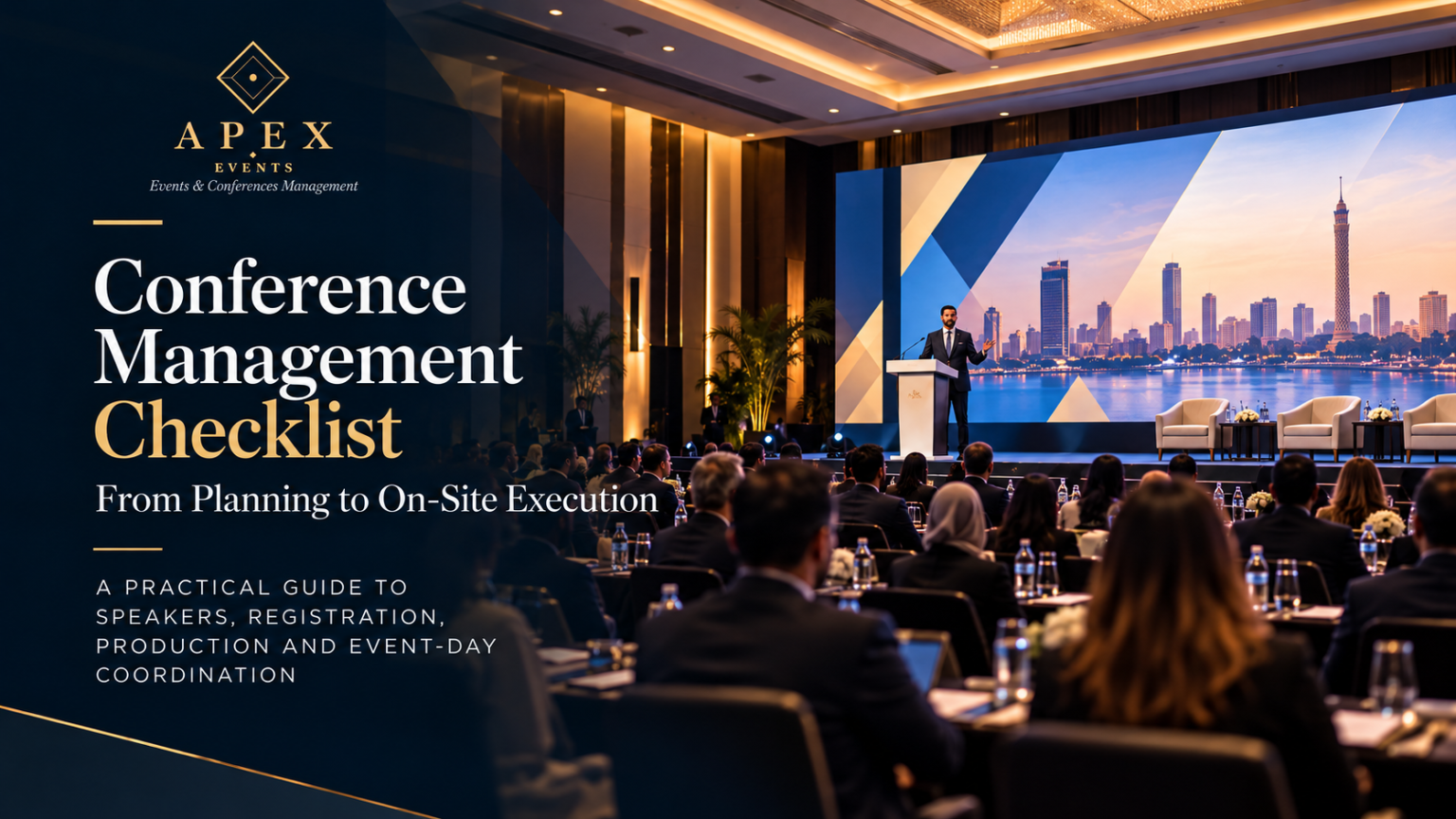
A conference has many moving parts. The final experience depends on how well they are coordinated. This checklist covers the main areas to manage from the initial brief through event-day execution.
Define the conference objective and format
Start by clarifying the purpose of the conference, target audience, expected attendance, session format and decision-makers. The programme may include keynote speeches, panels, workshops, demonstrations, networking or live connections. Each format affects the production plan.
Confirm the venue and operational requirements
Check room capacity, stage dimensions, ceiling height, access routes, power, internet, rigging points, breakout rooms, registration space and back-of-house areas. Before finalizing the production design, identify any venue limitations.
Build the programme and speaker plan
Create a master agenda with session durations, speaker names, moderator roles, breaks and transitions. Collect speaker requirements early and confirm whether each session needs lecterns, handheld microphones, lapel microphones, confidence monitors, timers or presentation control.
Plan registration and delegate flow
Design registration around the expected number of attendees and their arrival pattern. Then confirm how guests will check in, receive badges and move into the conference area. Clear signage and adequate staffing reduce queues and improve the first impression.
Coordinate technical production
Conference production typically includes stage design, LED or projection, sound, lighting, presentation systems, recording and sometimes live streaming. Design these elements together. In addition, assign clear responsibility for control, backup equipment and content playback.
Learn more about our Conference Management and Event Production services.
Prepare presentations and media
Collect presentation files before the event wherever possible. Next, check slide dimensions, embedded videos, fonts and audio. Keep final approved files in a structured folder and define a process for late speaker updates.
Create the production schedule
The schedule should include supplier access, load-in, setup, testing, rehearsal, registration, conference start, breaks, closing and dismantling. Keep technical setup time separate from rehearsal time. This prevents teams from testing systems while speakers are already waiting.
Run a technical rehearsal
Test microphones, presentation switching, videos, lighting looks, walk-on cues and remote connections. For panels, confirm seating positions and microphone distribution. For live links, test the full connection path rather than only individual devices.
Prepare an on-site operations plan
Assign clear responsibilities for registration, stage management, speaker coordination, technical control, venue liaison and client communication. Also make sure the team knows who can approve changes and how issues should be escalated.
Check contingency plans
Identify the items that would most affect the conference if they failed. This may include presentation laptops, internet connectivity, microphones, playback devices or power. Therefore, include appropriate backups based on the importance of each system.
Manage the conference in real time
During the event, timing and communication are critical. The event manager and technical team should monitor the agenda, speaker readiness, content playback and room conditions. At the same time, the client should stay informed without unnecessary disruption.
Post-event review
After the conference, record operational feedback, technical notes and client comments. For recurring conferences, this review becomes a useful reference for future editions.
Conference management with Apex Events
Apex Events provides conference management in Egypt covering planning, coordination, technical production and professional on-site execution. For projects that require one partner across the full scope, see our Complete Event Management service.
Frequently asked questions
What does a conference management company handle?
The scope can include venue coordination, agenda planning, speaker support, registration, technical production, suppliers, rehearsals and on-site event operations.
How important is a technical rehearsal?
It is one of the most useful ways to reduce event-day risk, especially when a conference includes multiple speakers, videos, panels, live links or complex presentation cues.
Can one team coordinate both planning and production?
Yes. A coordinated approach can reduce communication gaps because programme planning, technical production and on-site execution are managed within one workflow.
