
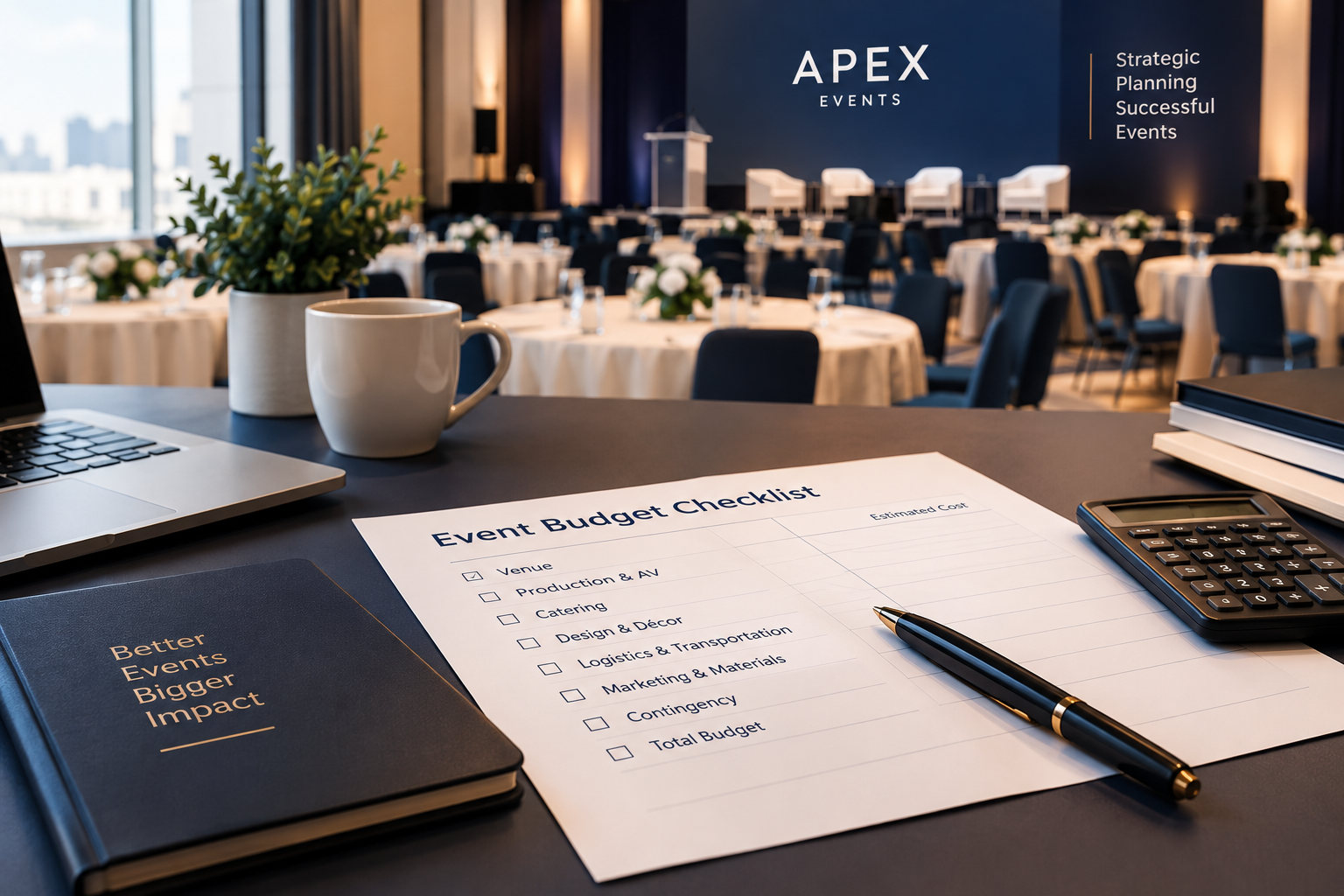
A clear event budget helps your team make informed decisions, compare proposals fairly, and reduce last-minute surprises. For corporate events and conferences in Egypt, the final cost depends on the event format, venue, audience size, production requirements, and the level of support needed.
This guide explains how to structure an event budget before requesting proposals, without relying on guesswork or comparing quotations that cover different things.
1. Define the event before estimating costs
Start with a short brief that records the event objective, audience, estimated attendance, date, location, format, programme length, and expected outcomes. A half-day meeting, a multi-day conference, and an evening gala have different operational requirements.
The clearer the brief, the more useful and comparable the proposals will be.
2. Organise the budget into clear categories
Use categories that reflect the actual scope of your event. Depending on the brief, these may include:
- Venue and facilities: room hire, furniture, access hours, and any venue-specific requirements.
- Technical production: staging, LED screens, sound, lighting, presentation equipment, and technical crew.
- Content and programme: speaker coordination, agenda materials, presentation support, and rehearsal time.
- Branding and signage: stage graphics, directional signs, registration branding, and approved printed materials.
- Registration and guest experience: invitations, attendee lists, check-in, ushers, and guest-flow planning.
- Catering and hospitality: meals, coffee breaks, service requirements, and dietary considerations where applicable.
- Photo and video: coverage requirements, deliverables, and delivery timelines.
- Transport and logistics: transfers, loading access, deliveries, storage, and movement between locations when needed.
- Event management: planning, supplier coordination, production schedules, on-site management, and closeout.
Not every event needs every category. Keep the list aligned with the approved scope rather than adding services by default.
3. Separate essential requirements from optional upgrades
Identify the elements required to deliver the event safely and professionally, then list optional enhancements separately. This makes it easier to adjust the concept if the budget changes without losing sight of the event’s main objective.
For example, distinguish the technical equipment required for clear presentations from optional scenic elements or additional content deliverables.
4. Compare proposals on the same basis
A lower total does not always represent better value if the proposals cover different deliverables. Ask each provider to specify:
- What is included in the proposed scope
- What is excluded or priced separately
- Quantities, specifications, and service hours where relevant
- Setup, rehearsal, event, and dismantling access times
- Client responsibilities and approval deadlines
- Applicable taxes, payment terms, and quotation validity
Use the same brief and comparison checklist for every proposal. If an item is unclear, request clarification before comparing totals.
5. Plan for changes and contingency
Event details can change as attendance, programme requirements, or venue conditions become clearer. Agree internally how changes will be approved, who can authorise additional costs, and how revised estimates will be documented.
Set an appropriate contingency based on the event’s complexity and uncertainty. There is no single percentage that fits every event; decide it with the project stakeholders and document what it is intended to cover.
6. Check venue and technical constraints early
Before confirming the budget, verify practical details that may affect production or logistics: room capacity and layout, power availability, internet requirements, rigging or installation restrictions, loading access, setup windows, sound limitations, and any venue-mandated suppliers or fees.
Early checks help avoid planning around equipment or layouts that cannot be delivered in the selected space.
7. Track approvals and commitments
Keep a simple budget tracker with the estimated amount, approved amount, committed costs, actual costs, payment status, and the person responsible for each item. Record changes and approvals in writing so the team can see the current position without searching through multiple message threads.
Review the tracker at agreed milestones, not only in the final days before the event.
8. Review the budget after the event
After the event, compare the final costs with the approved budget. Record the reasons for material differences, supplier or venue issues that affected delivery, and lessons that can improve the next planning cycle. Keep the review factual and useful for future decisions.
Event budget checklist
- Event brief and attendance estimate confirmed
- Scope and deliverables documented
- Venue and technical requirements checked
- Budget categories and assumptions listed
- Proposals compared against the same scope
- Exclusions, taxes, payment terms, and validity clarified
- Contingency and change-approval process agreed
- Budget tracker assigned to a responsible owner
- Post-event financial review scheduled
Build the budget around the brief
The most useful event budget is not simply a list of prices. It connects the event’s objectives to a clear scope, realistic operational requirements, and documented decisions. Starting with a shared brief and comparing proposals on the same basis gives your team a stronger foundation for planning.
Apex Events supports corporate events and conferences through planning, event production, and on-site coordination. If you are preparing an event in Egypt, visit Apex Events to discuss your brief and requirements.
